Of Dogs and Fleas, Or a Letter to an Old Comrade

Ituri, 21 January, 2018.

Dear M.B.,

It has been a while since we exchanged correspondence, I hope all is well.

My reason for writing to you is, last night I had a strange dream that I need you to help me make sense of. I know Banyoro are good at interpreting dreams and you make good mediums between us mortals and the spirits of our ancestors.

It was the most strange of dreams. In it I saw a big dog, a Rukamba,  the biggest I had ever seen. The dog’s body was in an awkward twist as it tried to bite at its own tail. It kept straining its neck to reach the tail but it couldn’t. It seemed the more it strained, the shorter the tail grew, and the more the frustration on the dog’s face.

There was another strange occurrence. The dog could talk, you know, like humans. Like you and I.

Amidst its twists and turns, the big dog let out a cry: “If only I could bite off this tail! It is the cause of my flea infestation!”

It doubled-down on its effort to bite its own tail, this time twisting its spine into a near coil, but the dog’s teeth could barely touch the last hairs of the tail.

Frustrated, the dog gave up. Momentarily.

Then something even stranger happened: the dog’s tail grew a mouth and started to speak too. I kid you not!

Chaos, I tell you.

In its defense the tail retorted, “but I have always worked diligently to ward off many fleas…”

“My flexibility, strength, and length and ability to reach every part of the body, except the head, has kept many fleas at bay,” continued the tail.

Visibly angry, the rest of the dog merely shook its head and paused a few seconds, or minutes, I don’t really recall the exact duration.

Then the big dog started the strange twist-dance with its tail again. It spun the whole of its body, anti clockwise then clockwise, in a bizarre twist that must have left its insides hurting! Still, it could not reach or bite the tail.

Now weary, the voice of the big dog grew hoarse. Where it used to bark, it now growled and grumbled. It grew restless. The tail meanwhile also shrunk in size before my very eyes. It’s hairs grew thin. It grew shorter. It wagged slower than before.

The only thing that seemed to grow in size were the fleas. From small microscopic beings to the size of a well-fed housefly!

The giant fleas now sucked at the big dog with reckless abandon. The tail, too short to reach the rest of the body, preferred to keep in the war of words with the head of the dog.

Their growls now became even more intense. The big dog spun like a whirlwind. Left. Right. Then back. It was a sight to behold.

Then without warning, a big storm blew low and hard, taking with it the big dog in my dream.

Taken. Caput. No more.

The big dog was gone. In its place was left a litter of beautiful puppies—big-eyed and with moist snouts, they were the most beautiful puppies I have ever seen.

Then I awoke to blinding light coming through my bedroom window. Someone had drawn the curtains, and turned up the radio volume.

My heart was racing. I had a cold sweat. My head hurt. I was confused. I was scared.

And playing on the radio was Jimmy Cliff’s 1993 rendition of John Nash’s famous “I Can See Clearly Now” song. You remember it from the movie Cool Runnings?

(Ooh…)
Look all around, there’s nothing but blue skies
Look straight ahead, there’s nothing but blue skies

I can see clearly now the rain is gone
I can see all obstacles in my way
Here is that rainbow I’ve been praying for
It’s gonna be a bright (bright)
Bright (bright) sun-shining day …

Such a strange dream, don’t you think?

As soon as I regained some of my cool, I sat up in my bed and penned you this letter. As you read it, I am still in my pyjamas. I may not leave my bedroom today until I know the meaning of this strange dream.

Sincerely yours,

K.T.

Rwanda: Do Nice Guys Really Finish Last? 

The World Bank last week released its “Ease of Doing Business” report. In the East African region, Rwanda yet again trumped neighbours by ranking number 41 globally (a 15 places jump from last year’s ranking). Kenya followed closely in 80th position, having jumped 12 places from its previous ranking. Uganda, Tanzania and Burundi followed in positions 122, 137 and 164 respectively.

But there’s more to the rankings.

Since the start of the rankings 15 years ago, Rwanda has, at 52, implemented the most reforms in sub-Saharan Africa. Neighboring Kenya comes second here also having implemented 32 reforms.

So consistently, for the past 15 years, Rwanda has tinkered with and hacked this Ease of Doing Business index stuff…in the process becoming a global reform leader. But Rwanda has not become a Singapore. And it is not about to become one anytime soon on the back of these forms alone.

For me this is the greatest irony of “reform” and the gospel of economic transformation especially in the global south.

Turns out there’s only so much tinkering you can do. At the end of the day the results of the undertaking are only slightly greater/better than those of your neighbour(s) who prefer(s) to sit on their laurels. Or so it seems.

The next example takes us to the same amazing country, Rwanda. This time hacking not just business reforms but football!

In an interview with our publication earlier in the year, a Ugandan journalist friend narrated a rather fascinating story about the Rwanda national football team’s exploits at the previous CHAN football tourney.

In preparation for the tournament Rwanda hired Opta, UK based sports data company, and analysts from premier league side Bournemouth to prepare the team for CHAN.

The job for these analysts was simple: using data from how Rwanda’s opponents play, advise how the team can employ tactics to defeat them.

The analysts watched the last five games of Gabon, one of the teams in Rwanda’s CHAN group, and noticed a player on the left flank who tripped whichever opponent ran at him. They passed on the information to the Rwandan team.

When the two teams finally played, the Rwandan winger kept running at the Gabonese defender until the defender was sent off, and in the process Rwanda won the match by 2-1 to qualify the for the quarterfinals. Rwanda would eventually be exited from the tourney by eventual winners D.R. Congo.

How a poor country like Rwanda, with so many priorities, can afford to spare effort and scarce resources to help its national team succeed, not at the World Cup or AfCON but a continental tourney for home-based players defies almost everything we’ve come to associate with poor countries. It also sums up the spirit of a people who choose not to define themselves by what the world expects of them, but where they think they belong: the very top of technology use in sports in this case.

Sadly, Rwanda may not even win the World Cup in our lifetime. DRC, like we saw at CHAN, stands a better chance.

Which reminds us of the question, old as humanity itself: Why do nice guys finish last?

In the world of human relationships, while women say they want to date nice guys, their actions and choices often suggest the opposite. Hollywood is inundated with examples such as these (Whitney Houston and her estranged marriage to Bobby Brown comes to mind) and books spanning such diverse fields as psychology and zoology have been written about the phenomenon.

Thus parallels can be drawn between the two worlds – of human relations and economic transformation – and the conclusion is a simple one: doing the “right” thing, and acting right, is not a guarantee to economic heaven, football glory or marital bliss. Somewhere, a bad boy, shabby and with a foul conduct to match, always gets to walk away with the bead-eyed beauty. Unfair, this world!

As Rwanda, Kenya Head to the Polls, East Africa Watches with Bated Breath 

The long-awaited is here! The two East African nations of Rwanda and Kenya go to the polls this August. Rwanda will take the first bite at the cherry on August 3 and 4, while the latter will have their turn on August 8.

First to Rwanda. Although the results of the coming poll are considered fait accompli (in favour of the incumbent) by several observers, and the exercise altogether deemed a “boring” affair – what with the lack of adversarial flair many have come to associate with electoral politics in Africa – the campaigns have taken on a life of their own online.

First with a series of articles in the Economist that seemed to suggest a “climate of fear” in the lead up to polls (see another equally fallacious one in the Washington Post, here).

The response from the Rwandan online community couldn’t have been more timely. In classic wordplay, “climate of fear” morphed into a twitter hashtag #ClimateOfCheer displaying the festive mood at most of President Kagame’s rallies, that could be mistaken for carnivals!

It is an interesting time to be an observer of affairs in Kigali this season. On the streets of the capital one cannot miss the near-festive mood: public transport cars are draped in red, blue and white – colours of the FPR Inkontanyi – flags. T-shirts bearing the incumbent’s image are on sale at the street corner, including, interestingly, in the new Mr Price outlet at Kigali Heights. Beyond the presidential aspirant, there seems to be Paul Kagame (PK) the fashion icon. At a bar we went to with friends one evening I could count up to 10 people – from waiters to patrons – donning PK-inspired t-shirts and caps.

WhatsApp Image 2017-07-31 at 20.18.05.jpeg

PK the fashion icon? One of the many Kagame-inspired T-shirts on sale in Kigali

While this would seem to vindicate the Economist’s lazy attempt at explaining the “brand Kagame” phenomenon, you only need to walk the Kigali streets a little longer to be disabused of the notion.

Frank Habineza, of the Green Party, and Philippe Mpayimana, an independent candidate who once dabbled in journalism in the 1990s, are the other aspirants in the race for president. Woe unto them, you’d say. While their campaigns have not seen even a fraction of the numbers at RPF rallies, save for a number of school children and curious bystanders, they nonetheless stand a chance in the next government thanks to Rwanda’s constitution that ensures that the winner of the August 4 polls does not take more than 50% of cabinet positions.

A far cry from Uganda and Kenya’s first-past-the-post, winner-take-all system, Rwanda’s consensual politics could help explain the “boring” nature of Rwanda’s campaigns. You cannot tell your opponent to – borrowing from close to home – eat their mother’s something something… because you will have to serve with them in the same government.

Now to Kenya: the chilly July Nairobi weather can best explain the goings-on in East Africa’s biggest economy. News this afternoon of discovery of the body of Chris Msando, Director of ICT at the national electoral body (IEBC), who went missing last Friday sent chills down many spines. Kenya could yet head back to the senseless violence it witnessed in 2007, many observers suggest.

One such observer is a Ugandan journalist friend who I met in the Kenya capital late last year. He notes that, without exception, every Kenyan election in which an incumbent has been on the ballot has been characterized by violence: 1992, 1997, 2007, and, he hoped not, 2017.

The signs coming out of Nairobi seem to vindicate him for now, but we pray for better. A report in the regional East African newspaper this week noted concerns by Kenyan manufacturers about uncertainty ahead of the August 8 poll, and many have had to withhold major investments for the next 12 months. This has serious implications on the country’s economy alongside that of her neighbours.

Already billed as one of the most expensive elections on the continent, neighbours like Uganda will want to take lessons from the Kenyan polls for pointers on what the future holds if cut-throat confrontational electoral politics is not checked.

And here is where Rwanda’s example comes in: consensual, as opposed to confrontational, electoral competition will deliver us to Canaan faster than bloodletting!

***

This past weekend I was in serene Jinja for a friend’s wedding, believe it or not, the first time I’ve stayed in the town for longer than a day! It was a good experience. While the town’s heydays seem to be in the distant past, there are signs a new dawn is approaching. Driven largely by local tourism.

At the Sailing Club, as we downed a few beers, I had an interesting chat with one of the groomsmen — the Oxford – JP Morgan – Columbia MBA type — about fortunes here and abroad. Tell you what, brace yourselves for the coming wave. The American, European, now Asian, ship is losing steam fast and the growth winds will soon blow south…but we need to get our African house in order first.

All the best in your marriage, Leo and Esther!

Yes, Uganda is “Friendly” to Refugees, But That’s Half the Story

Uganda seems to be a darling of the international press lately over our all-welcoming refugee policy. In a world where countries are building borders and walls around themselves, Uganda is opening itself up to those who cannot find peace in their home countries. An opinion in the Washington Post this week wondered why Uganda is more welcoming to refugees than the United States. There’s been many other pieces of punditry of the sort all over the place.

It’s a good time to identify as Ugandan. Even more now that the country is hosting several heads of state, the UN secretary general, and numerous other delegates for the first ever Solidarity Summit for refugees.

But amidst all this frenzy, I am yet to read a nuanced account of what is behind Uganda’s “good” refugee policy – every major international outlet is regurgitating the same explanations, albeit by different “experts”.

Veteran journalist Charles Onyango Obbo tried to shed light on this Ugandan “exceptionalism” in the Daily Monitor this week (read his piece, and thank me later!). He uses the example of Ankole and Buganda as communities that have always welcomed migrants and assimilated them into their cultures; and in doing so grown prosperous because of the cheap labour provided by the refugees.

The story is the same, I suspect, for many Ugandan communities. In Tooro for example, with the influx of Bakiga and Banyarwanda from south western Uganda. The two communities have since taken on Tooro identity (with pet names to match!) and gone on to own some of the largest tea estates in the area.

How I wish Uganda uses this renewed interest in the country to “re-brand” itself as the welcoming, tolerant country many know it to be.

Because while all this good is happening, the image that is portrayed of the country is still one that is fraught with stereotypes. Most reference to Uganda today in any book still draws largely on the image (some say notoriety) of Idi Amin. Where the authors try hard enough to stay “current” their imagination can only take them as far as caricaturing Ugandans as bigots who want to “kill” gays!

I have just finished reading Nuruddin Farah’s 2014 novel, “Hiding in Plain Sight,” a book about Somali identity in a cosmopolitan world. In the book Farah makes an effort to deconstruct generalizations and caricatures made of Somalis all over the world – as prejudiced, war-mongers, etc.

The irony is that he makes those same generalizations about other communities in the book. So the Ugandans are bigoted, corrupt and homophobic. The Kenyans are cheats. Uganda’s role in Somalia has nothing to do with the country’s pan-African ideals, but a desire by the generals (and their lieutenants) to line their pockets by selling AMISOM food and fuel to the terrorists.

Oh, and all Ugandans seem to enjoy a good meal of mattocks (Matooke) and peanut sauce. So much for a generalization!

Back to the refugee question: I think Uganda’s “exceptionalism” needs to be looked at in a more contextual way; one that puts into consideration the country’s history and unique experience over the years.

For example, the very notion of “Uganda” – is it a theoretical definition of territory or a collective “consciousness” of what is Uganda?  Maybe it’s the unconscious belief that Uganda – the geographical entity, as we know it – does not really exist, so it doesn’t change much if we allowed members of other neighbouring communities (called “countries”) to join us, that is responsible for the country’s favourable refugee policy. We don’t know.

We can make a few informed guesses though. But I am afraid this may not be possible in the midst of the storm caused by excitement over the good press the country is receiving.

In short: why would a country made up of “refugees” not welcome refugees?

On Stella Nyanzi and the “small penis” Rule

Mark Twain is famously said to have once quipped, “the reports of my death have been greatly exaggerated.” To that, dear reader, I wish to paraphrase: the rumours of my literary demise (as far as this blog is concerned) have been greatly exaggerated. The good news is, we are back and hope you never left too!

The subject of our yarn-y conversation today, Stella Nyanzi: academic, rubble-rouser and writer extraordinaire of erotica! To Dr Stella Nyanzi we shall return shortly, after a brief detour.

The late author Michael Crichton’s 2004 novel, “State of Fear” – about a conspiracy by Hollywood, environmentalists and academicians to create unnecessary fear among the public about global warming – did not go down well with many on the left. None more than Michael Crowley, then editor of the New Republic, who wrote a scathing review of the book in which he made uncharitable remarks about the author, comparing him to “a mighty t-rex that has escaped Jurassic park…”

Revenge from Crichton was swift, and boy was it sweet! Writing in his 2006 book, “Next”, Crichton caricatured Crowley as a wealthy, spoiled Yale-educated paedophile (aptly named Mick Crowley) with a small penis who rapes his sister-in-law’s two year old son.

And as if to drive his point home, Mick Crowley’s character does not play any significant role in the book and neither does he affect the overall plot in the fast-paced 448-page techno-thriller about genetic science and its mass-marketing industry that soon runs out of control.

Which brings us to the “small penis” rule – a strategy famously attributed to libel lawyer Leon Friedman.  Friedman’s “small penis” rule summed up states that a fictional character one is writing about can bear such close resemblance to the real life person that a reader will instantly make connection between the two, however, the author would then need to add an unflattering description: that the character has a small penis or has a bad body odour so as to throw off the possibility of any libel suit.

Since no man, however aggrieved, can come to court protesting they have a small penis, or foul body odour, the strategy allows many writers to get away with unflattering caricatures of real life people.

Now to our own beloved Stella Nyanzi: I first met her during the 2015 Writivism festival at the National Theater where we hosted her to speak about sex and its representation in African literature. During her conversation on the panel she read from her erotic Facebook posts and got the audience in a frenzy. In the end her panel was a crowd puller and one of the best attended at the festival.

Since then I have only followed her Facebook posts – at which point I should admit: I very much love the imagery in her writings especially the now famous one in which she wants to make love to the president. It was a masterpiece.

I am trying to make love with Mzee, but his thoughts are far away plotting about how to win again in the 2016 elections. His dancing-stick is dead asleep. I try to touch his man-boobs and tickle the old nipples with my hands, but he’s tightly clad in his bullet-proof vest until a time when Uganda is safe enough for him. I try to tickle his arm pits, but he is firmly holding the coming draft budget document under one armpit. I abandon the idea of foreplay with his torso and try to French-kiss His Excellency. He pushes me away, makes an ugly face by folding his lips and then telling me that the mouth was made for eating food only. I lie back, close my eyes and invitingly reveal my beautiful bossom, hoping that he’ll reach down and touch me. Nothing happens…

More recently however (starting February 2016, I think), her writing seemed to take a turn for the worst – from literary eroticism to outright slander and abuse. Her choice of victims included MISR’s professor Mamdani, the President, first lady, minister for ethics, among other public officials. Her list of victims keeps growing by the day and so do the numbers of her followers. The more graphic her writing has become, it seems, the more her fan base has grown.

This week she was charged with cyber harassment and offensive communication (for using her Facebook page to refer to President Museveni as a “pair of buttocks”) and remanded to Luzira prison until 25 April, much to the angst of many Ugandans who decried the government’s creeping intolerance to dissent and free speech.

Although a firm believer and advocate of artistic license – literary exaggeration and alteration of conventions of grammar to make a point – I am also skeptical of the Pandora’s box such unrestrained freedom can open.

There is no shortage of literary luminaries who have used the might of the pen to speak truth to power. Names like George Orwell or, closer to home, Okot P’Bitek and Wahome Mutahi (he of the famous “Whispers” column) come to mind. Wahome used his column in the Daily Nation to drive literary daggers into the heart of the KANU dictatorship. He was jailed, got out and wrote even more scathing, yet humourous, attacks. One thing distinguished him though: he did not resort to calling people by their nether regions!

Perhaps the dearth of provocative writers like Wahome (who passed on over a decade ago) explains the rise of voices like Stella’s. Or it is the changing times? All the same one ought to be worried for this dying art form. I see sparks of the same from my friend Jimmy Spire Ssentongo’s Observer column. Beyond that there is nothing really.

In closing, there is no doubt in my mind now that the current ruling class is not only devoid of any ideas, it is also allergic to new ones; which explains the anger meted out on Stella and many of her kind. But perhaps more saddening is the lack of imagination, you can say even ideas, in what another friend, Angelo Izama, calls the “waiting room” generation.

That the ideas – if any – informing the current ruling class should be contested is not in doubt, what is, however, is the intelligentsia’s weapon of choice – brawn or brains? Stella seems to have chosen the latter. But we can all join her to do better: we do not have to go to the sewers to reclaim Uganda.

***

The same Mark Twain, in another of his yarns, once claimed that the best way to harvest turnips is to not to pull, since it injures them but to “… send a boy up and let him shake the tree.” Perhaps the best way to “harvest” the current establishment is not through abuse; better we sent some boys to “shake the tree”. I will explain. Next time.!

Uganda: The Kids are Disruptive, And It’s a Good Thing Part II

The text below is part of a talk delivered by the author at the American Center in Kampala late last year. Its reproduction here is a result of the ongoing social media campaigns highlighting the terrible state of roads in Kampala and our deteriorating healthcare sector. In a small way, the text also pays tribute to Ugandan artists Chris Ogon (at the Daily Monitor) and Dr. Jimmy Spire Ssentongo (at the Observer although now increasingly popular for his social commentary on Twitter). Like others before them, they continue to hold the torch for progressive Ugandan society–tackling issues many in our middle class and in political office would rather not talk about.

PART I: Bobi Wine and Eddy Kenzo

The year is 2010. And Uganda is set for an election the following year in which the incumbent Yoweri Museveni is seeking a fourth elective term of office (sixth if you consider the two unelected terms served from 1986-1996). A then-upcoming artiste—earlier on affiliated to popular musician Bobi Wine’s “Fire Base” crew, Eddy Kenzo, had just released Stamina, an infectious song whose message and dance moves captivated partygoers and politicians alike.

It was then rumoured that the song had been commissioned to be used on president Yoweri Museveni’s campaign rallies. Indeed, fellow musician Bebe Cool had already established himself as a staunch supporter of the president and was a constant fixture on Museveni’s campaign trail.

To the surprise of many, and trying to leverage the growing rap scene that had produced poets such as Ganda language rapper Ernest Nsimbi alias GNL Zamba, the president’s campaign team released a production of Runyakitara traditional folklore Mpenkoni, more popularly known as Another Rap, featuring a rapping President Museveni.

While the president was using music to woo the youth and recruiting artistes to hype his crowds, Bobi Wine was on the fence.

With the 2011 election fast approaching, however, Bobi Wine would find his moment in the song Obululu, released in late 2010. Through the song, he cautioned people to remain peaceful in an election that was already tense.

This would not be the first time Bobi Wine was using a national event to venture into social commentary. In 2005, as the country was gearing up for the 2007 Commonwealth Heads of Government Meeting (CHOGM), Bobi Wine had composed Ghetto, in which he addresses issues of a common person that politicians only consulted when they needed votes.

When we commissioned the Ugandan arts journalist Andrew Kaggwa to write a profile on Bobi Wine ahead of his imminent presidential bid in July 2019, I asked the writer to go beyond Bobi Wine the “politician” and trace the roots of his anti-authority activism that started in the ghettos of Kamwokya in the 90s.

Kaggwa did not disappoint. In a 2500-word piece, he traced the origins of Bobi Wine’s activism. Kaggwa describes Bobi as:

An artist who had styled his career as one filled with a lot of responsibility to the downtrodden, when he wasn’t declaring himself a president of the underprivileged people of the ghettos, he was rallying fellow artists to grow up and end the fights.

Few who confront Bobi Wine as a political party leader today reference this background and fewer still give enough credit to him for his deep-rooted interest in the plight of the downtrodden that was a hallmark of his music for almost two decades before he ventured into politics. 

Many will recall the lyrics in Bobi Wine’s 2012 single, By Far.

My father said there’s more politics
In the music industry than in the Parliament
Forgive them father,
They don’t know who dem deal with, anyway!
We ah bad man, we don’t fear intimidation
That’s why we sit top of the nation
From Dangala Kamwokya where we come from
This is a new one for you…

While his politics today may seem divisive, I think Bobi Wine as an artist stands tall as a consistent champion of the interests of the poor; a champion of justice, and truly a national symbol of resistance.

PART II: Chris Ogon, Spire Ssentongo, Kwiz-Era

In mid-2019 the LéO Africa Institute publication, the LéO Africa Review, ran a mini-series “When Art Speaks” focusing on emerging arts voices in Uganda and the role of artists as voices for human rights.

As editor of the publication then I hosted a panel of Ugandan artists Chris Ogon, Hillary Mugizi (Ezi), Daniel Lagen, Alex Kwizera and Rita Asekeny.

Ogon, a cartoonist with the Daily Monitor, stands out for his critical commentary on national politics using his cartoonist pen. “Art is the best form available for one to express him or herself,” he told our writer then.

In a media environment that is increasingly censored from the centre (and self-censoring within the newsrooms), cartoonists like Ogon at The Monitor and Spire Ssentongo at the Observer stand out as critical voices that continue to hold public officials to account.

My own suspicion is that, aided by social media, Ogon or Spire’s cartoons probably attract more views than the headlines in the papers where they are published. And to me this speaks to the significance of the two artists.

They are brave enough to draw on paper what your brave journalist cannot put in words in the newspaper.

To borrow the words of veteran Ugandan journalist Charles Onyango-Obbo, describing the art forms of the likes of Byron Kawaddwa and Robert Serumaga (to whom we shall turn next) cartoonists like Ogon and Spire Ssentongo in their caricatures make “stinging statements about our politics, assessments of important social moments and movements and testaments about the national economy and mood…” in ways that a writer journalist would not lest he lands himself in jail, or worse exile.

They discomfort the powerful to a perhaps greater extent than the flowerly text of a Stella Nyanzi without attracting similar wrath.

PART III: Byron Kawaddwa, Robert Serumaga and Alex Mukulu

A popular story is told about Robert Serumaga, a Ugandan playwright and one-time Minister in the short-lived administration of Professor Yusuf Lule in 1979.

It goes thus, during the 1975 Organization of African Unity (OAU)—precursor to the African Union today—Robert Serumaga’s Abafumi Theatre Company was invited by Amin to entertain visiting heads of state. The play, Amayirikiti (The Flame Trees), featured a scene in which the actors on stage dramatized a hapless citizen being bundled into the boot of a car by soldiers and driven off. The scene was apparently in reference to what was happening in South Africa, but Amin’s secret police were quick to decipher a few days later that the play was not about goings-on in South Africa, but Amin’s terror at home.

As soon as the OAU summit was brought to a close the search was on for Robert Serumaga, who luckily had managed to escape alongside members of his theatre company to neighbouring Kenya.

Serumaga’s contemporary Byron Kawadwa, artistic director of the National Theatre, was not as lucky.

His popular play Oluyimba lwa Wankoko (The Song of Mr Cock), in Luganda, had been staged at Festac ‘77 also known as the Second World Black and African Festival of Arts and Culture, in Lagos, Nigeria.

Written as a social satire, the play was deemed as a spoof on Amin’s regime and upon return from Lagos Byron Kawadwa was picked from the National Theatre in Kampala by Idi Amin’s agents, thrown into the boot of a car and his body was dumped in Namanve forest a few days later.

According to one of the troupe members interviewed by the Monitor newspaper a few years ago, following Kawadwa’s death the group never met again—marking the beginning of a sad chapter in Uganda’s theatre industry that has not recovered since.

Playwrights like Alex Mukulu have tried to revive theatre in Uganda by staging social satires but the number of theatregoers has been dwindling over the years. Stand-up comedy and music shows now attract larger audiences, perhaps a testament to the changing times.

Where Serumaga and Kawadwa pioneered Theatre of the Absurd, today’s generation of comedians who grace the National Theatre seem to have found a soft spot in Ugandan minds for licentious content peppered over with tribal jokes.

PART IV: Concluding Thoughts and Tribute to the Online Activist

Majority of the 12 million internet users today were born prior to 1986. The figure is certainly bigger if you stretch this to include those who were too young to witness the NRA’s march onto Kampala in January 1986.

Little wonder a large section of these young Ugandans—what a writer friend rightly calls “Museveni’s babies”—find President Museveni’s references to the country he found in 1986 a constant pet peeve.

The so-called Museveni babies often resort to social media to channel their aspirations as well as frustrations with the affairs of the country presently.

At the forefront of this zeitgeist are artists like Chris “Ogon” of the Daily Monitor, whose cartoons add flavor to an otherwise increasingly self-censoring print media; while other artists like Alex Kwizera and Hillary Mugizi (Ezi) are exploring new interactions between art and social media. Both command a huge following on social media, and their art overtime has tilted towards social commentary.

The social movement all these and many other young people in the Arts represent today may still be formless, undefined, and may not make a dent on Ugandan society in any significant way, but it is nonetheless worth our attention.

Postscript: Kusi Ideas Festival

I have just returned from the Nation Media Group’s inaugural Kusi Ideas festival held in the Rwandan capital, Kigali. The festival–named after the southerly “Kusi” trade winds that blow the Eastern Africa coast from April to September–is part of the media conglomerate’s activities to mark its 60th anniversary.

For two days some of Africa’s leading minds, decision makers and students converged at the imposing Intare Arena in Rusororo to gaze into the next 60 years in Africa. The host president Paul Kagame was in attendance, joined by his Congolese counterpart Felix Tshisekedi to ruminate on the same subject.

Ideas like Kusi are significant in many ways, not least because, borrowing from the NMG CEO Wilfred Kiboro, they offer “a platform to look at the next 60 years in Africa and make them more predictable and glorious.”

Too often conversations about Africa’s past and future look at the continent through the lens of things happening to it, and often there’s little agency for the African in his/her fate. Where such agency exists (for example, an African start-up somewhere is pioneering a new online payment system) it is trivialized, its impact and potential overstated or embellished.

Which brings us back to the NMG Chairman’s quest for a “more predictable” future in Africa.

In many ways, 60 years today i.e., 1959, resonates with Africa’s Independence decade. By 1959 only nine African countries had attained independence. Today the number is 54. Yet the 60 years between 1959 and 2019 have seen the promise of self-determination, that was soon dashed by one-man rule; then economic upheaval in the 70s and 80s; civil wars in the 90s; AIDs; the wave of democratization; the new millennium; and now China in Africa.

Each of these major upheavals over the last 60 years has left us with a number of lessons to reflect upon.

From the Casablanca v. Monrovia Groups we ought to have learned the limits of pan-African unity in the face of nationalism; from the coup-infested 60s and 70s the limits of one-man rule; from the “lost decades” of 1970-80 the dangerous idea that “import-substitution” industrialization is; or the folly of printing money to cure inflation. Why? Because 60 years later we are flirting with some of these same ideas–big man rule and petty nationalism–in the face of an increasingly globalized and complex world.

These are some of the ailments the continent will need to deeply reflect upon as we head into a no doubt chaotic future where Africa, by virtue of its natural and human resources, will have to take on more responsibilities on the world stage. And platforms like Kusi, just like the winds that blew ideas and trade towards the Eastern Africa coast, should guide us towards this more glorious future.

***

The conversation on debt (and almost always followed by the mention of China!) is one that has dominated media coverage in East Africa over the last few years. To many journalists and editors in our newsrooms the bottom of the debt pan has fallen out and our countries are teetering on the brink of Chinese takeover. Well, not according to AU high commissioner, the Bissau-Guinean Carlos Lopez. Speaking on a panel at the first day of the festival he gave a statistic that left the room engulfed in deafening silence. And here it goes: that the totality of African debt is only equal to that of two EU countries, Belgium and Netherlands!

May the winds blow with you!

Jumuiya dithers, stumbles, but won’t die…yet

If you are a dyed-in-the-wool East Africanist recent developments in the region will have left you feeling quite distraught. “It would take a lot of bravery to assert that all is well,” says the regional publication The East African in its editorial this past week.

The union, now in its 20th year, will look back at 2019 as a year it would rather forget. What with the ongoing crises in its two newest members, South Sudan and Burundi. The latter continues to shun regional summits citing all kinds of reasons, including its tiff with neighbour and fellow EAC member state Rwanda; while there’s no peace on the horizon yet for the former, also Africa’s youngest nation. Warlords Kiir and Machar seem hell bent on pushing that jewel of a country back into the dark ages.

Then there’s the bigger tiff between Uganda and Rwanda. Since the border closure by Rwanda in February relations between the two governments have ebbed to perhaps their lowest point in two decades. There are no signs a “friendship” agreement signed in Luanda, Angola will hold and few rule out the possibility of an all-out confrontation between the two if tensions continue.

That two champions of regional integration, in Kagame and Museveni, chose Luanda to be an arbiter in their disagreement, overlooking Arusha, almost sums up the crisis the regional body finds itself. The closest to a nudge from neighbours Kenya and Tanzania came in remarks by Kenyan deputy president William Ruto who while speaking at a summit in Kampala in March described the border closure as “retrogressive”. Otherwise, presidents Magufuli and Uhuru Kenyatta have preferred public silence on the matter.

This is the state the community finds itself going on to its 20th birthday.

Yet, where the cynics may see looming disaster and a bloc hurtling towards an eventual breakup, the optimist will see an opportunity for stock-taking of the gains since the regional bloc’s revival in 2000.

The community has achieved two major pillars to the integration project since 2000, the customs union and common market. While we have toyed with a monetary union, and later, a political federation these two will be difficult to attain in the near future without a significant re-imagination of the EAC’s founding ideals.

In what you would call the EAC 2.0 (the version of the community that came into being in 2000), the biggest achievements have been in the area of trade and (to a great extent) free movement of East Africans within the community. While Kenya and Tanzania have taken turns at confiscating one another’s cattle; burned chickens destined to another’s market; and Uganda has had its sugar wars with Kenya; Rwanda its on-and-off border closures with Burundi and Uganda, intra-regional trade has improved greatly in the last two decades.

Take for example, the recent report on intra-regional trade that showed intra-regional trade in the region in 2018 stood at US$ 6 billion from about US$1.4 billion in 2000, and was growing despite setbacks like non-tariff barriers that still exist .

Rather interesting is that some of the biggest winners of the intra-EAC trade, Uganda and Rwanda, are the ones stocking the flames that threaten to reverse the gains of the last few decades.

On the social front, Tanzania’s bongo music has brought the region somewhat of a unique cultural identity and made Kiswahili cool for a number of young Africans. It will be hard for artistes in other parts of the region to avoid gravitating towards this form of expression, and we are already seeing signs in the likes of Eddy Kenzo, Sheeba and Jose Chameleone (who for ages has been a true embodiment of what you would call an East African). In the same way, Kampala’s parte contagion and care-free lifestyle have all but attained enviable status among our East African peers. Weekends in Kampala are very much an East African affair and lately festivals like Nyege nyege attract more Kenyans and Rwandans combined than Ugandans.

Which brings us to EAC 3.0.

Heading into its third decade, the challenges the region faces will be slightly different from the kind the UTAKE founder generation of Museveni, Moi and Mkapa had to grapple with. With the union expanding to accommodate more members we will soon run out of a sensible acronym for the membership, but that will be a small matter.

With trade firmly locking together the union’s 220 million strong market in 2030, next will be questions of identity. Who is an East African? What rights should they enjoy? Will the union stick to Kiswahili as the lingua franca?

All these are quite complicated matters that the current leadership in the region is not (and will not be, should they live to see 2030) competent enough to address, partly because of their historical baggage and worldview imposed on them by their experience. In short, the kind of bold thinking that triggered Museveni’s regional integration ambition (even proposing, some time in 1996, a union of East and Central Africa!) that eventually birthed the EAC in 2000; or Kagame’s pragmatism in pulling Rwanda into the union in 2007, is what, ironically, will hamper their ability to peer into the future East Africa 3.0 and take the leap of faith.

Both old men find themselves too risk averse to stare into 2030 with the kind of boldness and zeal as they did 20 years ago.

East Africa 3.0 will be driven by shared mentalities about being (East African) and less by the brick and mortar of physical borders, personal armies or a knack to jailing opponents. East Africans living in 2030 will find titles like Supreme Eternal Guide, for presidents, not only a relic from the stone age but quite disgusting as well. Joining the long list of relics, one hopes, will be the small Kenyan matter of tribal politics too.

Hongera Jumuiya!


Prof. Yash Tandon: The Economic Control of our Country is Not in our Hands

The afternoon of Good Friday April 14, 2017 found us at the home of veteran Ugandan politician Professor Edward Rugumayo in the pristine Boma neighbourhood that overlooks Fort Portal town. Rugumayo had been the Chairman of the National Consultative Council (NCC), the legislative body of the Uganda National Liberation Front (UNLF) government that succeeded the military dictatorship of Field Marshall Idi Amin in 1979.

In our company was Ugandan journalist Andrew Mwenda who, to the old professor’s amusement, sat across from us recounting the events that led to the ouster of President Yusuf Lule in June 1979. Mwenda recalled, almost from perfect memory, the pronouncement of the NCC declaring Yusuf Lule had been overthrown.

A new book by Rugumayo’s contemporary, Professor Yash Tandon, sheds light on the events leading up to the ouster of Lule as well as the ideological contestations that shaped the post-Idi Amin period in Uganda and the role the “Gang of Four”—that included Omwony Ojok, Dani Wadada Nabudere, Professors Rugumayo and Tandon.

Tandon barely stops short of calling the NRA/M’s revolution a still birth badly in need of rebooting because of the movement’s failure to transition from rebel movement into a vanguard party. Herein, argues Tandon, lies Uganda’s current leadership crisis which he traces back to the factionalism within Milton Obote’s Uganda People’s Congress (UPC) party that came to life at its controversial 1964 party delegates conference in Gulu.
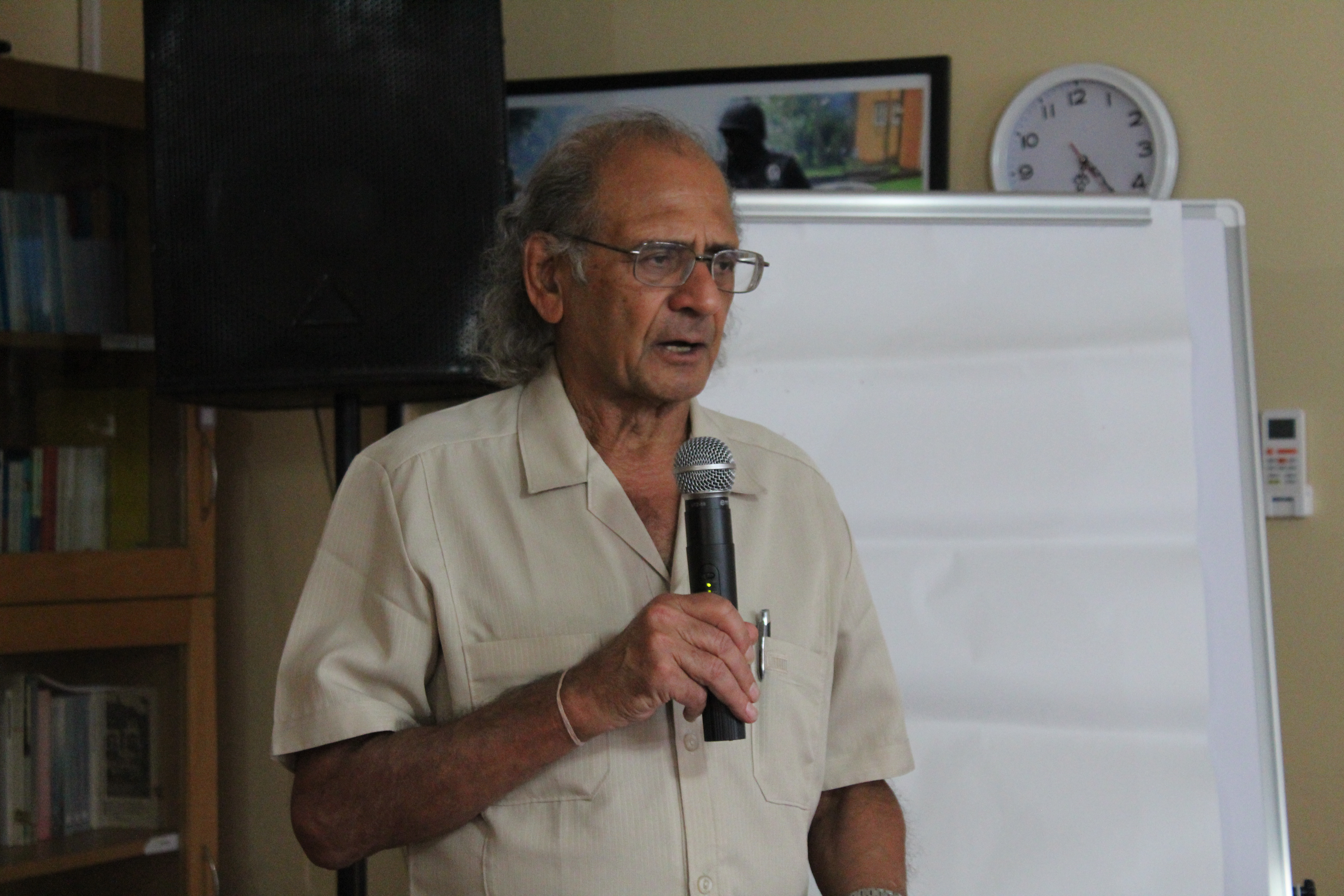
The Author, Prof. Yash Tandon, thinks Uganda’s current crisis can be explained by the failure to build a vanguard party and local ownership of the means of production./Photo by FES

Titled A Common People’s Uganda, which sounds like a play on the UPC’s famous ­Common Man’s Charter whose content Tandon largely shaped, the book was in May launched in Kampala.

On May 10, I had the opportunity to engage Professor Tandon and a panel consisting DP president Norbert Mao, academic Dr. Golooba Mutebi and Perry Aritua, Executive Director of the Women Democracy Network at an event organized by the German political foundation, Friedrich Ebert Stiftung.

Below I have reproduced part one of our almost two-and-a-half-hour conversation. I have edited out parts of the conversation for easy reading and context.

Kwezi: The backdrop to this book are the events of 1964 Uganda People’s Congress party delegates conference that takes place in Gulu and [then UPC Secretary General] John Kakonge’s expulsion from the UPC. Is it true, like professor Tandon suggests, Uganda’s current crisis could have been brewed in your own backyard of Gulu?

Mao: It is true that countries face watershed moments and one small decision can cast a long shadow over many years. In reading the book, I could see all the land mines we could have avoided, and it is all about who has power—the leaders or the people. It is true, indeed, the Gulu conference was a turning point. It marked a tendency for the then government led by Dr. Obote becoming more fascist, intolerant of contrary views and that is why many of the intellectual luminaries of UPC were labelled fifth columnists. It also marked a tendency for clique-ism.
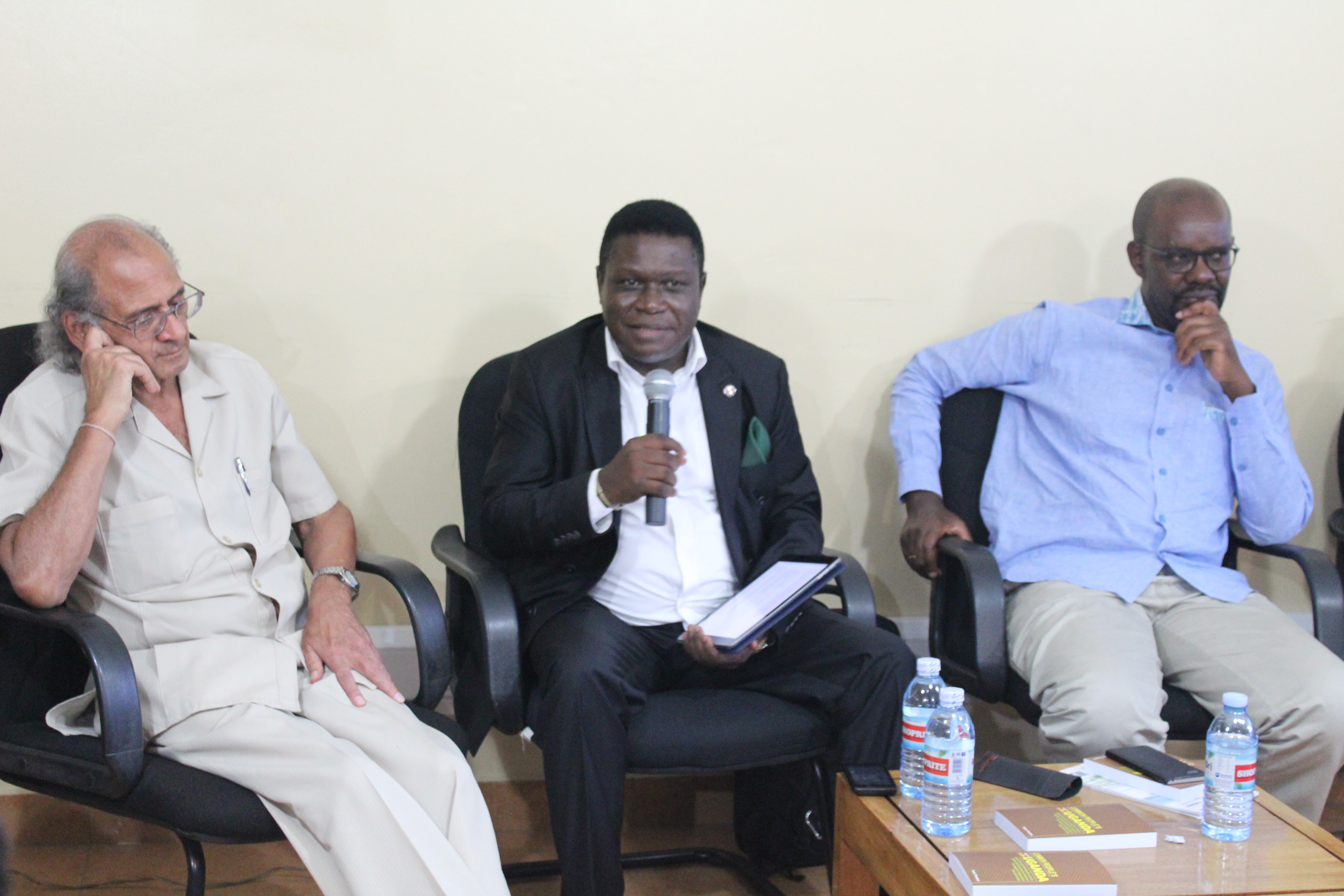
DP President, who also served as Chairman LCV of Gulu, Norbert Mao reflects on the events of the 1964 UPC delegates conference in Gulu./Photo by FES

You talk about Kyankwanzi…there are historical precedents.

The shadow of the events narrated in this book is that people started becoming survivors. After 1964, the trade unions became increasingly weaker, [the students’ union] NUSU was co-opted; that process of co-optation started alienating the people, and UPC on losing mass support started leaning more on the military and the GSU.

Kwezi: Veteran Kenyan journalist Philip Ochieng in his book I Accuse the Press while comparing socialism in Uganda and Tanzania says the reason why socialism failed in Uganda is because no “single socialist civilian existed to implement the programme and not a single socialist soldier to defend it.” Do you think there’s wisdom in such a statement or was the socialist experiment in Uganda bound to fail any way.

Dr. Golooba Mutebi: I am not aware that socialism succeeded in Tanzania…

Kwezi: …or the extent to which it succeeded?

Dr. Golooba Mutebi: Besides what we all say about how Nyerere was able to unite Tanzanians into feeling as one people by de-emphasizing ethnic differences, and creating a common language, I think on other accounts I am not sure I would claim that socialism succeeded in Tanzania. I think the difference between Uganda and Tanzania—if we talk of success in terms of long-term stability—is that Nyerere had a political party which he dominated, and also a political party that had the support of the largest majority of Tanzanians.

Nyerere’s authority was unquestioned. What Norbert [Mao] was describing here is that Obote never quite succeeded in imposing his authority on UPC or any member of UPC…so UPC ended up factionalized, and because it was factionalized, Obote had to find a way of removing those who were considered to be the enemies within and of course that intensified the crisis for him.

Now, Nyerere’s authority was never questioned until he stepped down. There lay Nyerere’s success. And the fact that Nyerere was able also within CCM to mentor and nurture young leaders who as you see CCM is still a very strong party–CCM’s changes of leadership are very orderly and organized. So, that was also a great success on Nyerere’s part and we are yet to see that replicated anywhere in East Africa or even beyond.

I think we have been saying for the last 30 or 20 years that the NRM will implode rather spectacularly once Museveni is out of the way because I think it is not farfetched to ask whether the NRM as a political organization actually exists.

Going back to UPC, today I would argue that the UPC exists in ways that the NRM does not. If you took Museveni out of the equation, UPC is likely to be a stronger party than the NRM and I will tell you why.

I think the UPC has deeper roots than the NRM does. And if we go back to what Norbert said which was equally valid, I think it enjoins us to actually look at how the UPC has survived the way it has.

Back to your question, I think the comparative success and failure between Nyerere and Obote lay in the authority they had over the political organizations they led, the extent to which they nurtured leadership and created a lasting ideology and the extent to which they were able to hold the party together. Obote failed, I think Nyerere succeeded.

Kwezi: Professor Tandon, in the book you mention quite often Uganda’s “primary” and “secondary” contradictions. It is a debate we come across quite often discussing contemporary politics in Uganda. Could you please expound on that?

Prof. Tandon: This is indeed the most important strategic question. Why strategic? Because you cannot have a strategy unless you know your enemy. It disturbs me that 57 years down the road we have not been able to identify who the enemy is. DP says UPC is the enemy, UPC says, no, it is DP. We have not understood who the enemy is. Nkrumah did. He said we received political independence but we are still neocolonies…

I have written in the book that the King of Bunyoro and Kabaka of Buganda were fighting amongst each other for years, decades… and then the British came to try and colonise Uganda. They still decided to come together and join forces. Our forefathers recognized who the principle enemy is.

Today? None of the parties know who the principle enemy is. They bicker among them selves fighting for power. What power? State power? Its not in your hands anyway… you can be president tomorrow but I bet you that stage doesn’t belong to you. I have traversed this road since 1964, and back then, when he was in Dar es Salaam as a student, Museveni did understand the principle enemy. I don’t know whether Bobi [Wine] understands, he is too young. And maybe he will understand who the real enemy is.

[…]

Kwezi: Another subject that the professor dedicates quite a bit of space in the book are the Dar es Salaam debates. In there we see intense debates between the “Gang of Four” comprising Omwony Ojok, Dani Nabudere, Professor Rugumayo and Professor Tandon, and other Ugandan exiles. Do we see any of that in Uganda’s academia today?

We seem to have a crisis right now, which is a perfect moment for the political and social sciences departments at the university to contribute their voice to this debate. Yet we seem to have lost that moment.

Dr. Golooba Mutebi: You have got me on the spot.

Laughter

I think a lot has changed in the way our universities function. The intellectual rigour that used to be there had already started dying by the time Norbert [Mao] and I went to the universities in the early 1990s. Today, sadly, if you held an intellectual discussion at the university, [and] you have not invited very prominent people, you will hardly get an audience. Certainly not an audience comprising academics. You will get a lot of undergraduates standing up to satisfy their curiosity as to who is there.

There are so many reasons for that and I can assure you that is not a preserve of Makerere. I have seen it in Rwanda, in Nairobi and Dar es Salaam. Something has happened to universities in Africa and I think a lot of that has to do with the degrading of the capacity of academics to actually concentrate on their work as academics–which is to produce […] and extend the boundaries of knowledge. Academics these days are part-time academic[ians who] spend a lot of the time doing other things.

So that explains why those debates are not there. And in many cases, we academics have a tendency to turn ourselves into opposers of sitting governments that it is almost a knee-jerk thing; everyone wants to oppose government… if you support government then somehow you are a traitor or a sell-out.

A lot of people still associate me with Makerere but I left 11 years ago and that is because I realized that I could never be the academic I would have been if Makerere had been what it was before we went there.

So, those debates are no longer there. Even [when you] look at our parliament, why is it that there are no debates in parliament that will hold the public interested in what is going on there?
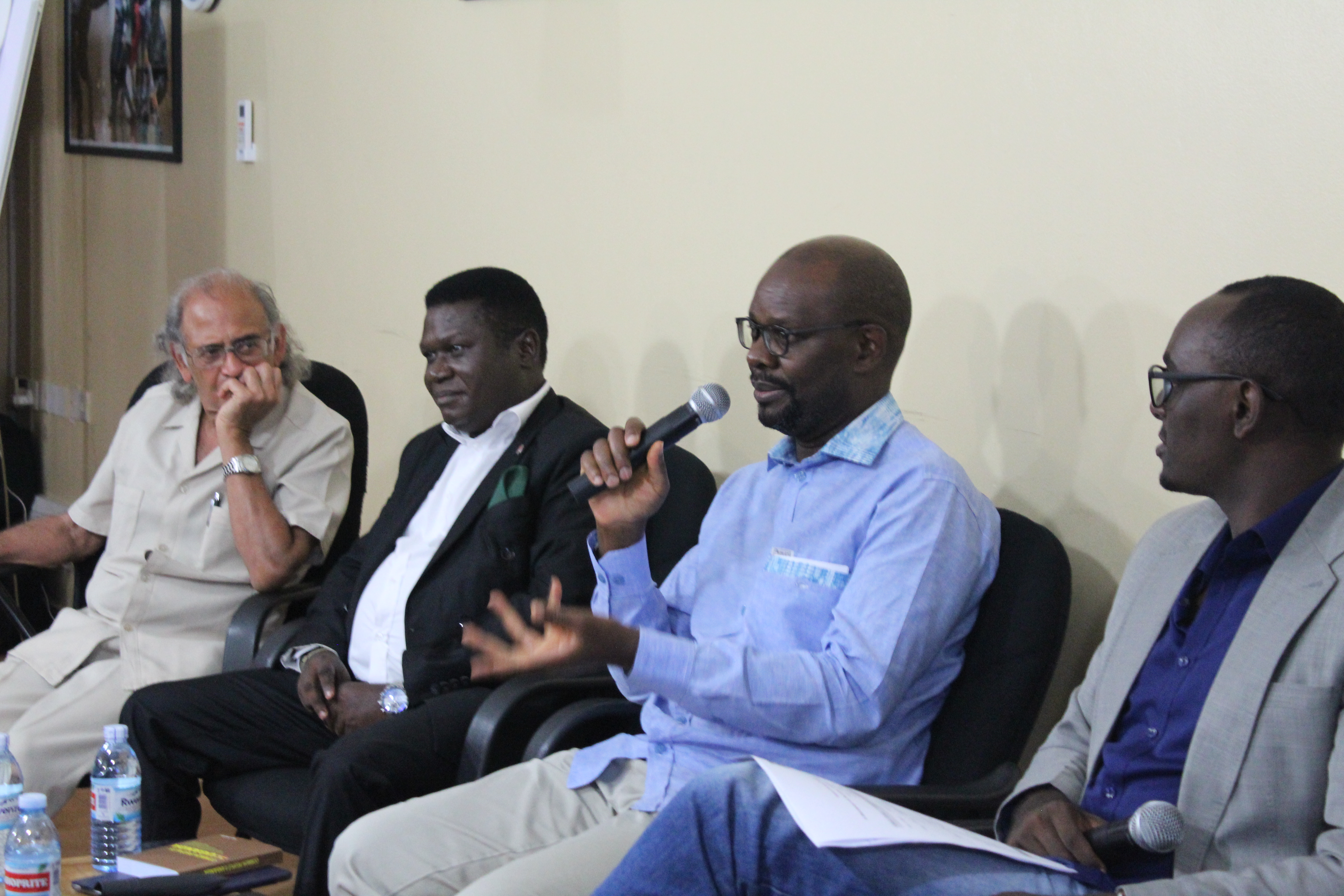
L-R: Prof. Tandon, Norbert Mao listen to Dr. Golooba Mutebi./Photo by FES

This takes me back to something you said which I would like to contest a little bit.

You said everything that Museveni criticized Obote for, he has done worse. I don’t agree and I will tell you why.

I think Uganda is less divided now than it was when I was a child. Let me give you a simple indicator. There is a time in this country when DP was a Catholics party and UPC belonged to Protestants, today I don’t think we can say the same things.

[Turns to Norbert Mao] Is your party still a party of Catholics?

Applause

Which group of Ugandans does the NRM belong to?

So, I think that at that level where religion was such a big factor in politics, we have gone a bit beyond that.

Now, President Museveni has a lot of tactics for recruiting and maintaining political support, and those tactics are damaging in the long term, but at the same time Museveni has brought so many Ugandans into leadership. There are thousands of Ugandans today who are leaders of all different kinds—I think that is a good thing. It is not perfect, but it is a good thing.

[For example,] LC1 chairpersons; you do not look for them when you don’t need them but you never get to know how important they are until you need them, and then you realize there is something quite positive about the LC system.

So, I think it is okay to criticize Museveni, and there are many things you can criticize him for, but I think he has moved us a step from where we were when I was a child. we are still divided, but not as badly as we were then.

Uganda: The Kids are Disruptive, And It’s a Good Thing

What do two young men, barely in their mid twenties, have to do with the authorities in Kampala being in a very foul mood lately? So much so that, in a space of four years, the two would be arrested a combined forty times – ten arrests shy of Opposition leader Kizza Besigye’s own record! Meet Uganda’s self-acclaimed political activists, Wabulembo Robin and Brian Atuhaire.

Brian has been in and out of the police cells so often that when I call him for this article, I joke about which cell he is currently being held in. He is a free man, for now. Wabulembo, too, has been out for a while after he had been picked up for unleashing yellow pigs onto the Kampala’s streets.

And they are not about to give up.

In September last year, as the sun set down on chilly Nairobi’s Westlands suburb, I sat down with a Nairobi-based Ugandan journalist to pick up on a conversation we had had months earlier about Uganda’s youthful population. Kalinaki, in a Daily Monitor article, had expressed disappointment at Uganda’s youths who “carry the manila paper of poverty placards with pride as tickets to the vanilla flavour of monetary reward”. This, while comparing them to the out-going  Septuagenarian generation who in their twenties “dreamt in the violent but progressive colours of revolution.” Now, Kalinaki can be quite acerbic and embellishing in his writings, but here he had a point: young people today seem to have lost some of that revolutionary fervour that characterized the generations that preceded them.

While the twenty-something-year-old Museveni was reading Franz Fanon and frothing at both sides of the mouth with Marxist ideals, the only froth most young people will get to see today is that out of a glass of beer!

But this should be a cause for celebration, not worry, I will explain.

You see, while most observers firmly fixed their eyes on Uganda’s (and indeed Africa’s) growing youth unemployment and disenchantment with government, they missed a very interesting mini-revolution that has been taking place for a while now – birthed by the expanding broadband connectivity and social media. For years, away from the incompetence that defines the public sector in most of Uganda, a few smart young people, ensconced in innovation hubs funded by tech-philanthropists, hit away at their computers as they sought to  create the next “app”. And, boy, did we see them; from an Uber-esque service for your laundry, to one that would detect malaria – without the need to have yourself pricked.

All these groundbreaking innovations were birthed on a single floor in a small storied building located in Kampala’s Kamwokya suburb.

For a while government was too busy clobbering its opponents to realise the groundswell of optimism and creative freedom places like HiveColab had brought.

Not until social media became an important tool in the recently concluded elections.

Most of these tech-prenuers, terrified by the teargas and violence being meted out on opposition sympathizers, joined the campaign from the safety of their smartphones – through platforms like Twitter and Facebook. Most of the applications that they were building found use in the political campaigns – as interactive platforms for the different candidates (popularly known as “bots”) to “populate” their social media pages and drive traffic; online radio stations for candidates; and databases where candidates could keep track of their agents at polling stations.

Technology had at last emerged as the closest attempt at a “leveled” playing field for the incumbent’s opponents. In fact, according to a fly on the wall, the decision by government to block access to social media and mobile banking services was partly due to concerns by authorities that an opposition party had planned to use the mobile money platform to send facilitation for its poll agents across the country. The party had also built an elaborate online platform where voters would in real time be able to report electoral malpractices and incidents, if any, of violence.

At the heart of this “disruptive” innovation are young people like my friend Samson Tusiime: young, ingenuitive, ambitious and with the smarts to match! Meeting a few days before the elections, he mused about the role technology would play in the upcoming polls; how he had built a platform that would track in real time incidents of election violence from across the country.

“I wonder how you guys are going to steal the election this time,” he quipped to a friend standing besides us at the bar. The fellow sipped the last of his beer and left. Almost in a hurry!

It wasn’t to be though as the idea was successfully nipped in the bud by government, to its credit.

So when I read yesterday that Samwyri – as we fondly refer to him – had been picked up from his home by plain clothed officers, on charges of planning a demonstration in Jinja, my heart sank. A line had been crossed, I felt.

A cursory look at Uganda’s body politic reveals a growing trend of intolerance – peppered by dogmatism and religious zealotry.

“This creeping intolerance has also slipped into our political sphere,” I narrate to another friend on the eve of the president’s swearing-in; social media sites such as Facebook and Whatsapp had been blocked again. I tell him how I have had to install a VPN to get around the government imposed “firewall”. The professorial type always, he argues that what we are seeing is in fact a product of the shrinking political space within the NRM – after they expelled their long-serving Secretary General and de facto number two, Amama Mbabazi – and that the ruling party’s irritability and paranoia can only get worse with time.

But my own reading of the tea leaves paints a rather more optimistic picture from this fight over internet freedoms. The country is on the verge of a generational and cultural shift. So what we are seeing as anarchy, growing government censoriousness and radicalness is a reaction to new cultural forces that are sweeping hard, low and fast enough to threaten the very foundations of what is considered “tradition” – servitude, religiosity and obedience to authority. In short, “tradition” represents the status quo, a coterie that, according to Rajat Neogy, “spells out the don’ts in large capitals and is vigorously intent on the things that cannot or must not be done”. Yet for all the effort in preserving itself, a don’t-culture is always indicative of the dying phase of any culture, a culture at its last gasp fighting for dear life. Uganda today would seem to perfectly fit that description.

If there is anything you should be praying for, it is that the kids – Samwyri, Wabulembo, Atuhaire, even Sheba Karungi! – continue shaking that tree that Uganda’s don’t-culture is. While they risk falling off the branches and breaking their arms, the fruits from their shaking are more important for Uganda. Pray still, that many more join them, until the tree can take it no more…and gives way.

Go kids!